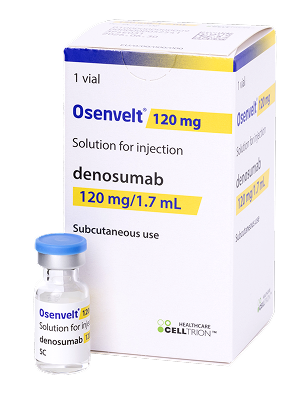
OSENVELT is available in a user-friendly single-dose vial1

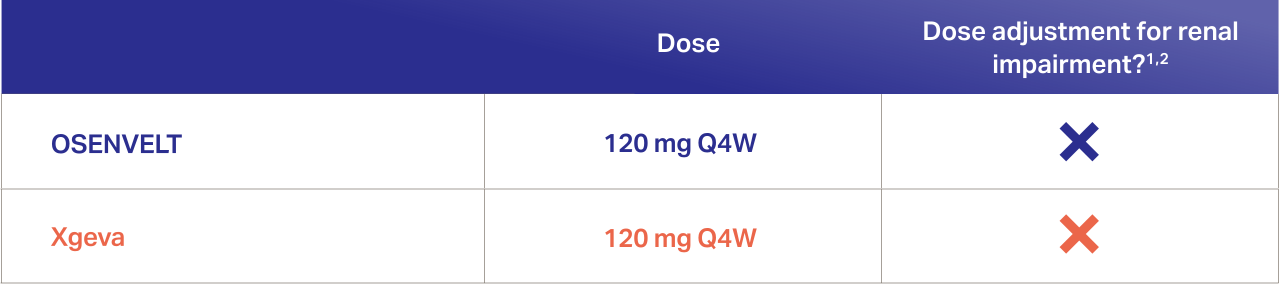
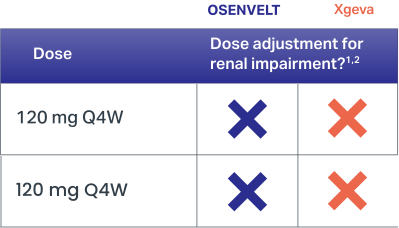
OSENVELT is available in similar forms as Xgeva® (denosumab)1,2


  • Patients with severe renal impairment (CrCl <30 mL/min) are at increased risk for hypocalcemia. Clinical monitoring of calcium, phosphorus, and magnesium is highly recommended in patients with severe renal impairment1
  • Pretreatment evaluation and counseling are identical to Xgeva1,2

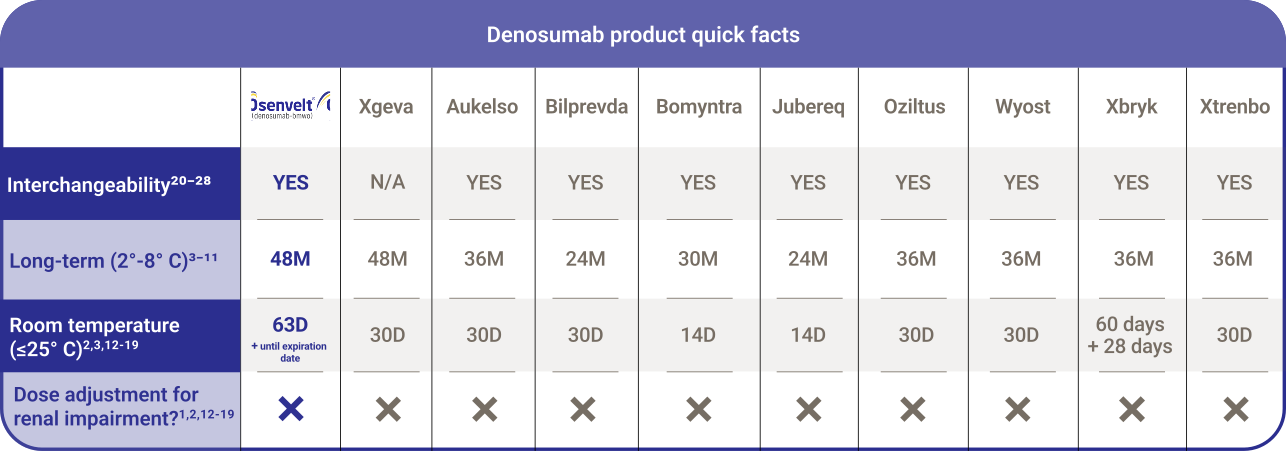
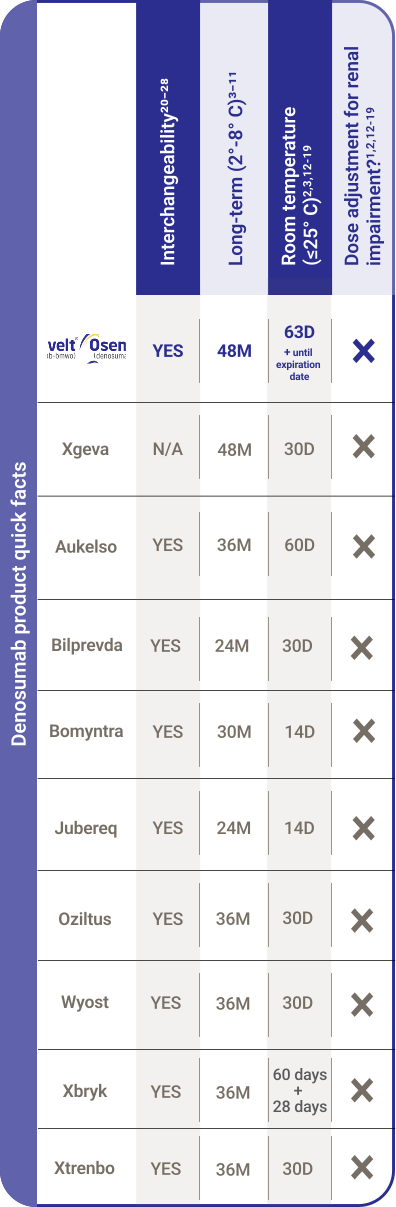
OSENVELT provides long-term stability similar to Xgeva® and longer than other available biosimilars3-11

OSENVELT offers:

  • Operational flexibility informed by extended stability data
  • An extended room-temperature window up to 63 days: longer than Xgeva and other available biosimilars2,3,12-19
  • Return-to-refrigeration allowance: one return within the 63-day room temperature period3


120 mg given subcutaneously by a healthcare professional every 4 weeks with additional 120 mg doses on days 8 and 15 of the first month of therapy1

OSENVELT is available in single-dose vials designed for ease of use, precision dosing, and reduced medication errors1

  • Eliminates drug waste with fully utilized doses
  • Reduces environmental impact with minimal medication waste

CrCl, creatinine clearance; Q4W, every 4 weeks.

References: 1. OSENVELT Prescribing Information. Celltrion USA, Inc; 2024. 2. Xgeva Prescribing Information. Amgen, Inc; 2020. Data on File. Celltrion USA, Inc. 2026. 3. Data on File. Celltrion USA, Inc. 2026. 4. US Food and Drug Administration. BLA Approval letter 125320/S-221 for Xgeva. September 16, 2025. 5. US Food and Drug Administration. BLA Approval letter 761436 for Aukelso. September 16, 2025. 6. US Food and Drug Administration. BLA Approval letter 761444 for Bilprevda. October 3, 2025. 7. US Food and Drug Administration. BLA Approval letter 761398 for Bomyntra. March 25, 2025. 8. US Food and Drug Administration. BLA Approval letter 761457 for Oziltus. December 19, 2025. 9. US Food and Drug Administration. BLA Approval letter 761362 for Wyost. March 5, 2025. 10. US Food and Drug Administration. BLA Approval letter 761392 for Xbryk. February 13, 2025. 11. US Food and Drug Administration. BLA Approval letter 761439 for Xtrenbo. September 26, 2025. 12. Auselko Prescribing Information. Biocon Biologics Inc.; 2025. 13. Bilprevda Prescribing Information. Amgen Inc.; 2025. 14. Bomyntra Prescribing Information. Fresenius Kabi USA, LLC; 2025. 15. Jubereq Prescribing Information. Accord BioPharma Inc.; 2025. 16. Oziltus Prescribing Information. Amneal Pharmaceuticals LLC; 2025. 17. Wyost Prescribing Information. Sandoz Inc.; 2024. 18. Xbryk Prescribing Information. Samsung Bioepis Co; Ltd.; 2025. 19. Xtrenbo Prescribing Information. Hikma Pharmaceuticals USA Inc.; 2025. 20. US Food and Drug Administration. BLA Approval letter 761404/Original 2 for Osenvelt. October 29, 2025. 21. US Food and Drug Administration. BLA Approval letter 761436/Original 2 for Aukelso. October 29, 2025. 22. US Food and Drug Administration. BLA Approval letter 761444/Original 2 for Bilprevda. October 29, 2025. 23. US Food and Drug Administration. BLA Approval letter 761398/Original 2 for Bomyntra. October 29, 2025. 24. US Food and Drug Administration. BLA Approval letter 761424 for Jubereq. October 29, 2025. 25. US Food and Drug Administration. BLA Approval letter 761457 for Oziltus. December 19, 2025. 26. US Food and Drug Administration. BLA Approval letter 761362 for Wyost. March 5, 2024. 27. US Food and Drug Administration. US Food and Drug Administration. BLA Approval letter 761392/Original 2 for Xbryk. October 29, 2025. 28. US Food and Drug Administration. BLA Approval letter 761439/Original 2 for Xtrenbo. October 29, 2025.

IMPORTANT SAFETY INFORMATION

Contraindications: Patients with hypocalcemia or with known clinically significant hypersensitivity to denosumab products.

Drug Products with Same Active Ingredient. Patients receiving OSENVELT should not receive other denosumab products concomitantly.

Hypersensitivity. Clinically significant hypersensitivity including anaphylaxis has been reported with denosumab products. If an anaphylactic or other clinically significant allergic reaction occurs, initiate appropriate therapy and discontinue further use of OSENVELT.

Hypocalcemia. Severe hypocalcemia can occur, and fatal cases have been reported. Monitor calcium levels and calcium and vitamin D intake.

Osteonecrosis of the Jaw (ONJ). ONJ can occur in patients on OSENVELT. A routine oral exam and appropriate preventive dentistry are recommended before starting and during treatment with OSENVELT. Good oral hygiene should be maintained. Avoid invasive dental procedures during treatment with OSENVELT. For invasive dental procedures, consider temporary discontinuation of OSENVELT. If ONJ develops, consult a dentist or oral surgeon. Extensive surgery may worsen ONJ, consider discontinuing OSENVELT based on a benefit-risk assessment.

Atypical Subtrochanteric and Diaphyseal Femoral Fractures. Atypical femoral fracture has been reported with denosumab products. During OSENVELT treatment, patients should be advised to report new or unusual thigh, hip, or groin pain. Patients with thigh or groin pain should be evaluated for an atypical femur fracture, including assessment for potential fractures in the contralateral limb. Interruption of OSENVELT therapy should be considered, pending a benefit-risk assessment, on an individual basis.

Hypercalcemia Following Treatment Discontinuation in Patients with Giant Cell Tumor of Bone and in Patients with Growing Skeletons. Clinically significant hypercalcemia, sometimes requiring hospitalization and complicated by acute renal injury, has occurred in denosumab-treated patients with giant cell tumor of bone and in those with growing skeletons, often within the first year after discontinuation. After treatment discontinuation, monitor for hypercalcemia symptoms, check serum calcium periodically, reassess calcium and vitamin D needs, and manage as appropriate.

Multiple Vertebral Fractures (MVF) Following Treatment Discontinuation. Following discontinuation of denosumab treatment, fracture risk increases, including the risk of multiple vertebral fractures. Evaluate the individual patient’s risk for vertebral fractures after OSENVELT discontinuation.

Embryo-Fetal Toxicity. Denosumab may cause fetal harm based on animal studies and its mechanism of action. Verify pregnancy status in females of reproductive potential before starting OSENVELT and advise them to use effective contraception during treatment and for 5 months after the last dose to prevent fetal harm.

Adverse Reactions:

  • Bone Metastasis from Solid Tumors: Most common adverse reactions (≥25%) were fatigue/asthenia, hypophosphatemia, and nausea.
  • Multiple Myeloma: Most common adverse reactions (≥10%) were diarrhea, nausea, anemia, back pain, thrombocytopenia, peripheral edema, hypocalcemia, upper respiratory tract infection, rash, and headache.
  • Giant Cell Tumor of Bone: Most common adverse reactions (≥10%) were arthralgia, headache, nausea, back pain, fatigue, and pain in extremity.
  • Hypercalcemia of Malignancy: Most common adverse reactions (>20%) were nausea, dyspnea, decreased appetite, headache, peripheral edema, vomiting, anemia, constipation, and diarrhea.

Please see full Prescribing Information.
INDICATIONS

OSENVELT® (denosumab-bmwo) is a RANK ligand (RANKL) inhibitor indicated for:

  • Prevention of skeletal-related events in patients with multiple myeloma and in patients with bone metastases from solid tumors.
  • Treatment of adults and skeletally mature adolescents with giant cell tumor of bone that is unresectable or where surgical resection is likely to result in severe morbidity.
  • Treatment of hypercalcemia of malignancy refractory to bisphosphonate therapy.

IMPORTANT SAFETY INFORMATION

Contraindications: Patients with hypocalcemia or with known clinically significant hypersensitivity to denosumab products.

Drug Products with Same Active Ingredient. Patients receiving OSENVELT should not receive other denosumab products concomitantly.

Hypersensitivity. Clinically significant hypersensitivity including anaphylaxis has been reported with denosumab products. If an anaphylactic or other clinically significant allergic reaction occurs, initiate appropriate therapy and discontinue further use of OSENVELT.

Hypocalcemia. Severe hypocalcemia can occur, and fatal cases have been reported. Monitor calcium levels and calcium and vitamin D intake.

Osteonecrosis of the Jaw (ONJ). ONJ can occur in patients on OSENVELT. A routine oral exam and appropriate preventive dentistry are recommended before starting and during treatment with OSENVELT. Good oral hygiene should be maintained. Avoid invasive dental procedures during treatment with OSENVELT. For invasive dental procedures, consider temporary discontinuation of OSENVELT. If ONJ develops, consult a dentist or oral surgeon. Extensive surgery may worsen ONJ, consider discontinuing OSENVELT based on a benefit-risk assessment.

Atypical Subtrochanteric and Diaphyseal Femoral Fractures. Atypical femoral fracture has been reported with denosumab products. During OSENVELT treatment, patients should be advised to report new or unusual thigh, hip, or groin pain. Patients with thigh or groin pain should be evaluated for an atypical femur fracture, including assessment for potential fractures in the contralateral limb. Interruption of OSENVELT therapy should be considered, pending a benefit-risk assessment, on an individual basis.

Hypercalcemia Following Treatment Discontinuation in Patients with Giant Cell Tumor of Bone and in Patients with Growing Skeletons. Clinically significant hypercalcemia, sometimes requiring hospitalization and complicated by acute renal injury, has occurred in denosumab-treated patients with giant cell tumor of bone and in those with growing skeletons, often within the first year after discontinuation. After treatment discontinuation, monitor for hypercalcemia symptoms, check serum calcium periodically, reassess calcium and vitamin D needs, and manage as appropriate.

Multiple Vertebral Fractures (MVF) Following Treatment Discontinuation. Following discontinuation of denosumab treatment, fracture risk increases, including the risk of multiple vertebral fractures. Evaluate the individual patient’s risk for vertebral fractures after OSENVELT discontinuation.

Embryo-Fetal Toxicity. Denosumab may cause fetal harm based on animal studies and its mechanism of action. Verify pregnancy status in females of reproductive potential before starting OSENVELT and advise them to use effective contraception during treatment and for 5 months after the last dose to prevent fetal harm.

Adverse Reactions:

  • Bone Metastasis from Solid Tumors: Most common adverse reactions (≥25%) were fatigue/asthenia, hypophosphatemia, and nausea.
  • Multiple Myeloma: Most common adverse reactions (≥10%) were diarrhea, nausea, anemia, back pain, thrombocytopenia, peripheral edema, hypocalcemia, upper respiratory tract infection, rash, and headache.
  • Giant Cell Tumor of Bone: Most common adverse reactions (≥10%) were arthralgia, headache, nausea, back pain, fatigue, and pain in extremity.
  • Hypercalcemia of Malignancy: Most common adverse reactions (>20%) were nausea, dyspnea, decreased appetite, headache, peripheral edema, vomiting, anemia, constipation, and diarrhea.

Please see full Prescribing Information.
INDICATIONS

OSENVELT® (denosumab-bmwo) is a RANK ligand (RANKL) inhibitor indicated for:

  • Prevention of skeletal-related events in patients with multiple myeloma and in patients with bone metastases from solid tumors.
  • Treatment of adults and skeletally mature adolescents with giant cell tumor of bone that is unresectable or where surgical resection is likely to result in severe morbidity.
  • Treatment of hypercalcemia of malignancy refractory to bisphosphonate therapy.